
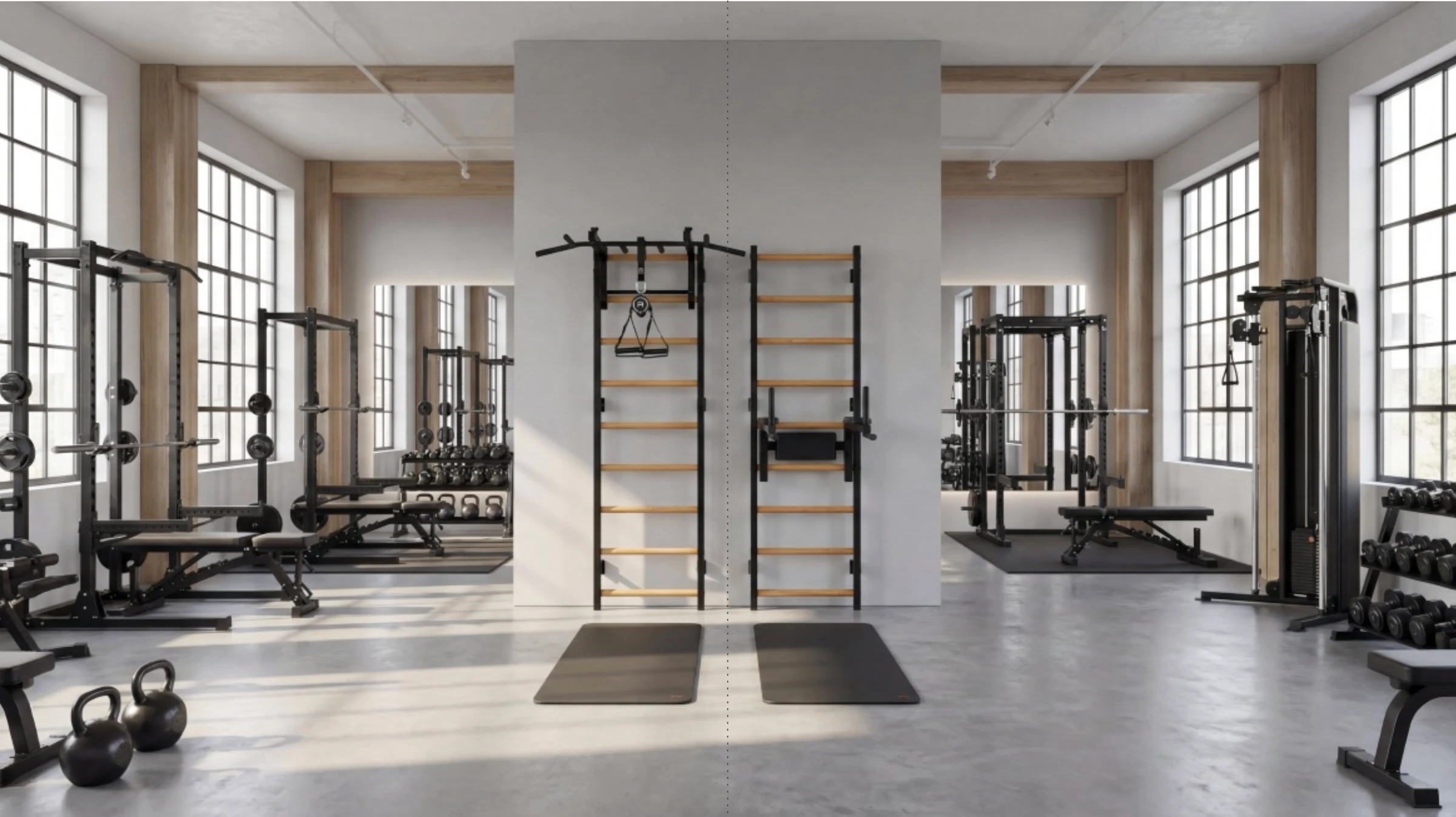
Why a BenchK costs more than a cheap wall bar.
BenchK wall bars run about $635 to $2,955 — more than the $100 ladder you found on a marketplace listing. Here's exactly where the money goes, when that trade is worth it, and — honestly — when it isn't.
Built once, for decades — EU-certified, rated for 330 lb, free U.S. shipping included.
Price is what you pay once. Cost is what you pay over the years.
On price, BenchK looks expensive. On cost— repairs, replacements, the floor space it swallows, and the big one, whether you actually use it or it becomes a coat rack — it’s often the cheaper decision. Two wall bars can look nearly identical in a photo and be completely different objects, and they will not cost the same to own.
Terry Pratchett gave this idea its best-known name in 1993, in Men at Arms— the “boots theory” of socioeconomic unfairness: a good pair of boots costs $50 and lasts ten years, while a cheap pair costs $10, leaks, and gets replaced again and again, so the man who “can’t afford” the good boots spends $100 over the same decade and still has wet feet. Wall bars behave the same way. For daily adult training, “cheap” usually means “bought twice.”
The honest caveat — and it matters — is that this isn’t a law of physics. If you genuinely only need a climbing ladder for the kids for a few years, a budget bar is the smart buy, and we say so at the bottom of this page. But the real waste was never overpaying. It’s buying fitness gear you stop using: a UK survey of 2,000 adults found 31% of home-gym-equipment owners use it only part of the time, and more than one in ten hadn’t touched it in over a year. A treadmill that becomes a clothes rack didn’t cost you its sticker price — it cost you the whole thing, for nothing.
The quality will remain long after the price is forgotten.
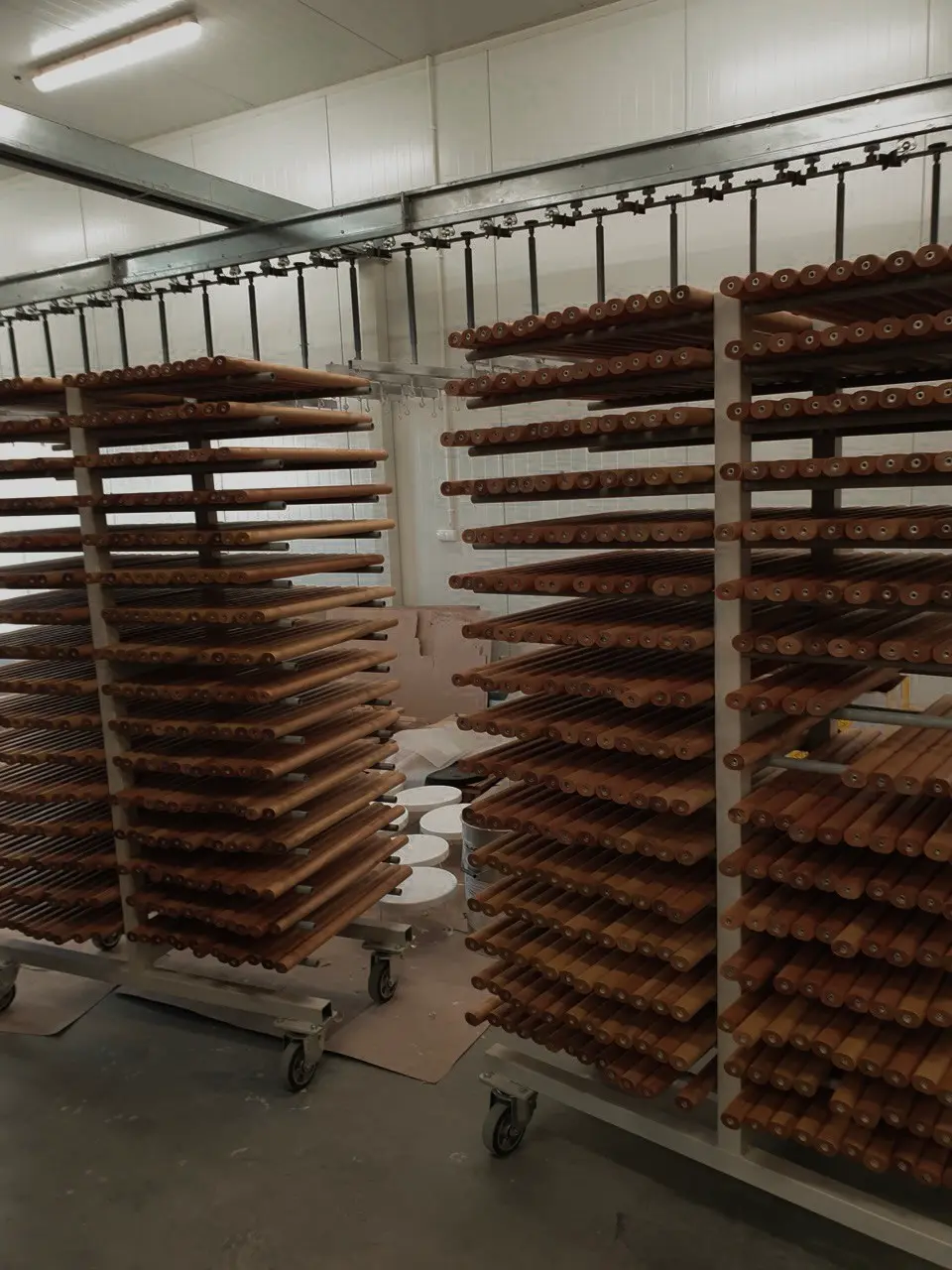
One solid frame. Rungs finished like furniture.
Spend an afternoon on Amazon and you’ll find Swedish ladders from roughly $100 to $320 — brands like JOYMOR and VEVOR among them. Most share the same recipe: light softwood or thin tube, dowel rungs of unspecified wood, and fasteners chosen to hit a price. They photograph well. They don’t age well.
A BenchK is built the other way around. The side rails are laser-cut, powder-coated structural steel— 40×50 mm, 2 mm wall — so there’s nothing to flex or work loose under load. The rungs are solid European beech, oval-profiled to sit comfortably in the hand and hand-oiled three times so they wear in rather than out.
That’s the difference you feel the first time you hang from one: a budget ladder tells you it’s taking your weight; a BenchK simply does, silently, the way a well-made staircase does. It’s rated for a 330 lb (150 kg) user and certified to the European safety standards PN-EN 12346 and PN-EN 913— numbers an unrated import simply can’t put on the table.
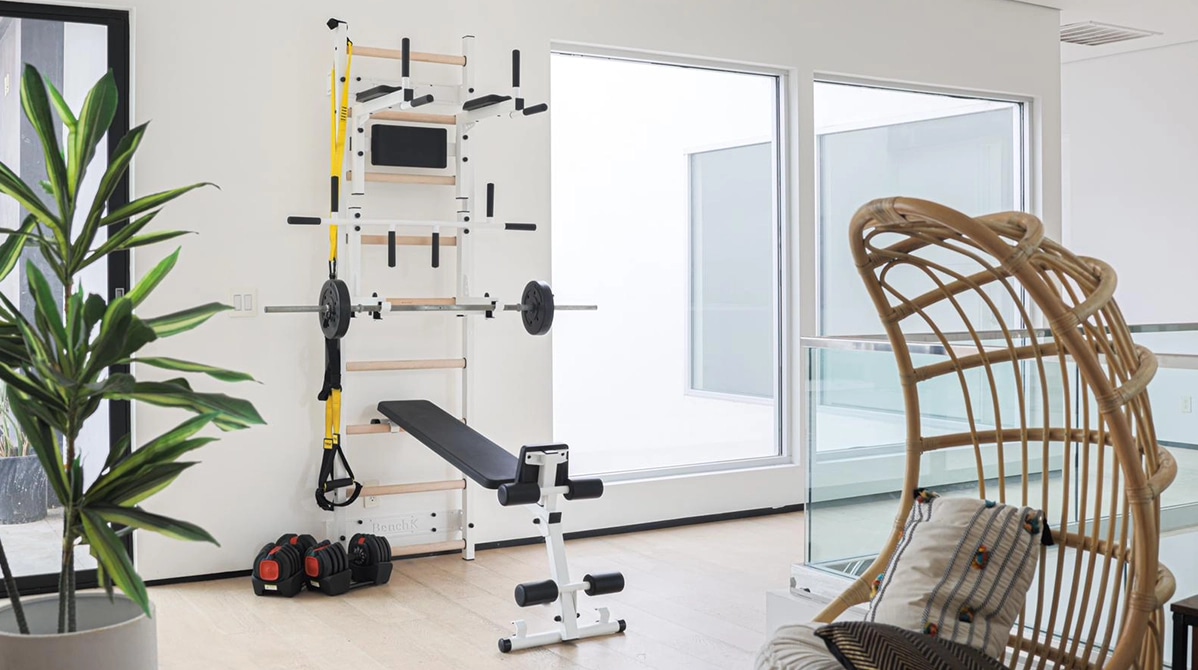
What you're actually paying for.
- 01
Commercial-grade steel, not hardware-store tube
The frame is a laser-cut, powder-coated steel profile — 40×50 mm, 2 mm wall — so it fits precisely and doesn't flex. Steel models are rated for a 330 lb (150 kg) user; wooden-pull-up-bar configurations for 265 lb (120 kg). Either way it's certified for schools, clinics, gyms, and studios under the European safety standards PN-EN 12346 and PN-EN 913.
- 02
Wood you'd actually want in your living room
The rungs are FSC-certified beech, hand-oiled three times with a food-safe oil — a furniture finish, not a quick coat of varnish. It's warm in the hand, and it ages in instead of flaking off. It's the reason a BenchK reads as Scandinavian furniture, not garage gear.
- 03
Design that earns its spot on the wall
This sounds soft; it's the hardest-nosed argument here. Equipment that looks good stays out, gets used, and isn't wasted money. BenchK's wood-and-matte-steel design took the FIBO Innovation & Trend Award in 2022 — and, more usefully, it passes the test that quietly kills most home-gym purchases: the partner who looks at it every day signs off.
- 04
A system, not a single tool
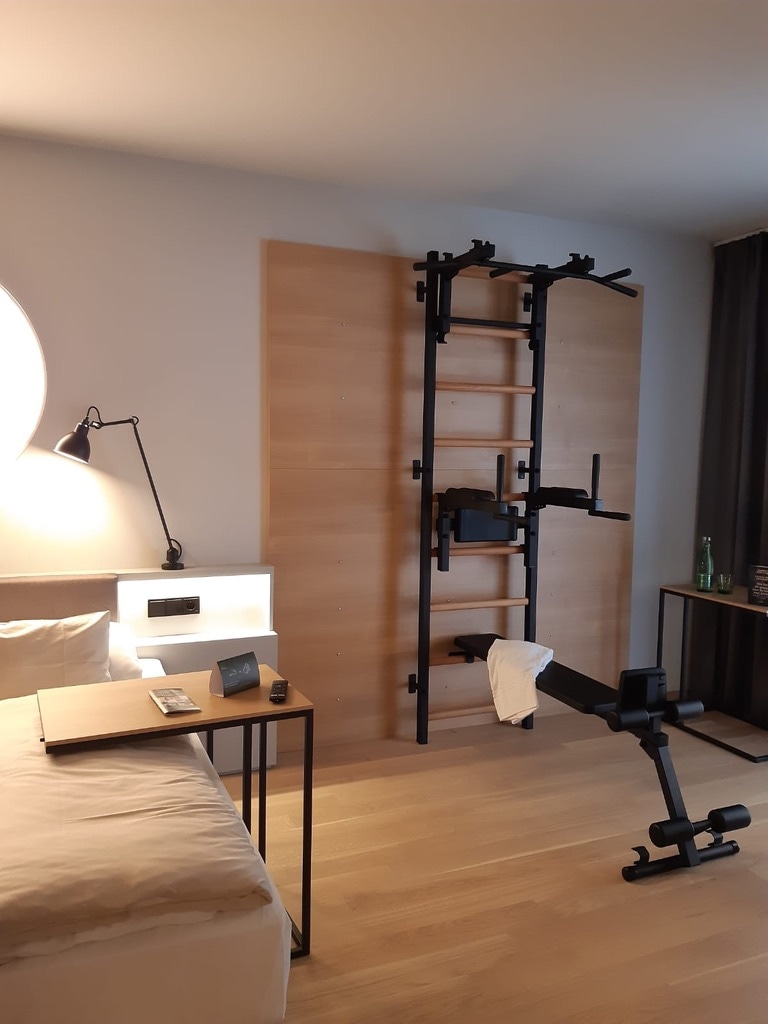
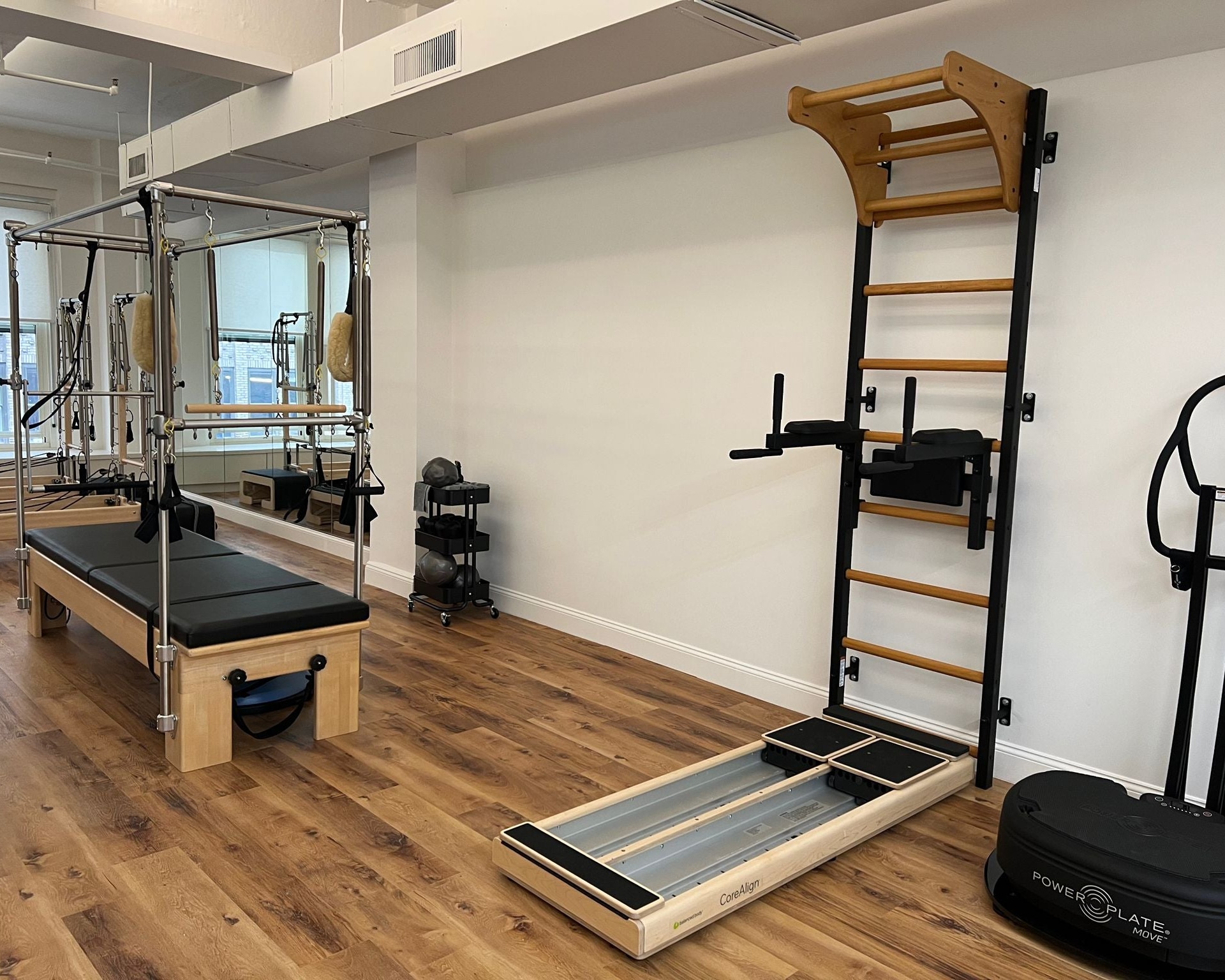
A pull-up bar does one thing. A BenchK wall is a base you build on — add a steel pull-up bar (PB2B, $379), a dip bar with padded armrests (DB1B, $629), a folding bench (B1B, $865), the Recoil S2 strap trainer ($399–$459), or a gymnastics set with rings and a rope (A076). One wall section does the work of a power tower, a dip station, a strap anchor, and an ab bench — in about 11 sq ft of wall and zero floor.
- 05
Engineering you can feel
Take the Recoil trainer: the price difference is literal R&D — a patented push-button that adjusts both straps evenly in about two seconds, instead of the thread-it-and-eyeball-it routine on an ordinary strap. (Straight about it: a TRX actually holds a little more — 350 lb to the Recoil's 330. The Recoil wins on the mechanism, not the load rating.)
- 06
A 10-year warranty — really a statement about lifespan
BenchK backs the metal frame and powder coat for 10 years, and the wood, padding, and accessories for 2. No company puts a decade behind a product it expects to die in three. The warranty is the durability claim, written down where it counts.
- 07
Proof from people who can't afford to replace things
The most convincing evidence isn't a spec sheet — it's the customer list. Praxis Pilates in New York City. 10Ten Fitness in Sarasota. Harry's Home Hotels in Austria, which put BenchK in 70 rooms. Businesses that run equipment all day and eat the cost when it breaks do this math carefully — and keep landing on the durable option.
What the price gap actually buys.
Strip away the marketing photos and line up the spec sheets, and the difference between a sub-$350 Amazon ladder and a BenchK is concrete. None of this makes a budget bar a scam — it means the two answer different questions. A budget bar answers “what’s the cheapest way to get a ladder on the wall this month.” A commercial-grade system answers “what do I buy once and stop thinking about.”
| Typical price | Frame | Rungs | Load rating | Safety cert | Warranty | 10-yr cost | |
|---|---|---|---|---|---|---|---|
| Budget Amazon import | ~$100–$320 | Light steel or all-wood | Unspecified softwood | Often unrated | None | 0–1 yr | Re-bought 1–2× — or unused |
| BenchK | From $635 | Laser-cut 40×50 mm steel | Solid European beech | Up to 330 lb (150 kg) | PN-EN 12346 / 913 | 10 yr on steel | One buy · ~25¢/day |
"Budget" reflects typical sub-$350 Amazon listings (for example JOYMOR or VEVOR) — fine for a child's occasional, unloaded use, not adult weighted training. Steel models are rated to 330 lb (150 kg); wooden-pull-up-bar configurations to 265 lb (120 kg). Prices in USD, current at time of writing.
Buy once — then divide by the years.
The quickest way to see the value is to quit staring at the sticker and start dividing. A Pilates reformer runs $4,000–$6,000 and claims 40–50 sq ft of permanent floor. Next to that, a BenchK 211B at $915 — wall bars plus a beech pull-up bar — is a different conversation. Spread across ten years of daily use, it lands at roughly 25 cents a day. A cup of coffee is a worse deal, and you throw the cup away.
Two more ways “expensive” gets turned on its head. It’s a consolidation, not an addition: a pull-up bar, dip station, strap trainer, stretching setup, and ab bench bought one at a time clear $1,000 easily and sprawl across 12–20 sq ft of floor. One wall folds all of that into about 11 sq ft of wall and no floor footprint. And it can replace a bill you’re already paying — a year of twice-monthly chiropractor visits often costs more than a 211B costs once, and the wall bar is still there in year five.
For a family the math is almost rude to the cheap option. A 211B with the A076 gymnastics set ($1,139) spread over the 20 years a wall bar realistically lasts — across kids who climb at two, swing on the rings at four, do pull-ups as teenagers, plus two parents — is about $57 a year for the whole household. The Pikler triangle they outgrow in three years costs more per year than the one thing nobody outgrows.
How businesses justify the cost.
For a business, “is it worth it” really means “can I defend this number to whoever signs the check.” So here are the numbers, with the assumptions out in the open. Treat them as illustrative models, not promises — your rates, payer mix, and occupancy will move them around.
Physical-therapy clinic. One unit can serve about three patients a day. At a blended ~$32 per billable therapeutic-exercise unit across ~250 working days, that’s on the order of $24,000 in billable activity per unit per year, against a per-unit cost near $1,498 (a 721B at $1,069 plus a mounted Recoil S2 Gym at $429). Payback in weeks, not years — and unlike a cable machine, there’s nothing to fray.
Pilates studio. Six units along one previously dead wall open a class that seats six. Two classes a day, six spots, $35 a head, a conservative 50% full, five days a week is roughly $4,550 a month on a six-unit wall costing about $8,688 — payback in around two months. Six BenchK units cost less than two reformers and seat three times the clients.
School PE. Ten units at $635 is $6,350. Spread across the 20 years certified steel-and-beech equipment lasts, that’s about $318 a year to keep an entire class moving. Here the deciding factor is usually liability, not price: gear certified to PN-EN 913 and rated for 330 lb is defensible in a way a bargain import simply isn’t.
The common thread: for a business, “cheaper” is almost always the false economy. Cheap equipment under commercial load gets replaced sooner, creates downtime, raises liability questions, and — in a studio clients photograph — quietly tells people you cut corners. The equipment is part of the brand.
Where BenchK actually sits.
Pretty well — once you compare like for like, which is the trick, because most wall bars aren’t like for like.
Budget wall bars (≈ $100–$320, online marketplaces) are genuinely useful for a kid’s room or light stretching, but carry lower weight ratings, thinner wood, and no accessory system. The Rogue Stall Bar 3.0 (about $1,210) is an excellent American-made heavy-duty build with enormous brand trust — but it’s a stall bar, with no integrated ecosystem of dip bars, benches, strap trainers, or desks, and it’s styled for a garage, not a living room. NOHRD makes beautiful solid-hardwood wall bars aimed at luxury interiors, with a narrower accessory range than BenchK’s.
BenchK’s spot, in a sentence: more beautiful than the heavy-duty options, more functional than the design-first ones, and the widest accessory ecosystem of the bunch. For the full head-to-head on specs and price, see BenchK vs. Rogue vs. NOHRD.
When a BenchK is NOT worth it.
Honesty is the whole job of an article like this, so here are the cases where you should keep your money. If any of these is you, a BenchK isn’t your best value — and we’d rather say so than sell you something you’ll resent.
- 01
You only need a kids' climbing ladder for a few years
If no adult will use it and it doesn't need to outlast childhood, a budget wall bar does that job for less. Buy the budget bar — genuinely.
- 02
You rent and can't drill into the wall
BenchK mounts into studs or solid masonry. If you can't mount anything, look at the standalone Recoil S2 Home ($429) instead — it anchors over a door.
- 03
You'll honestly only ever do one exercise
If all you want, forever, is a few pull-ups, a $30 doorway bar is the rational buy. BenchK earns its price by being many tools in one. Only need one tool? Then you don't need the system.
If none of them is you — if you want equipment for daily adult use that looks good enough to stay out, does the work of five machines, and is still on your wall a decade from now — then the higher price is doing precisely what a higher price is supposed to do.

The fully-loaded answer: the BenchK 733.
The flagship Series 7 wall bar pairs a convertible steel pull-up bar (it flips to a 441 lb barbell rest), a dip station, and a reversible bench onto one wall — every attachment removable by hand. EU-certified, 10-year steel warranty, free U.S. shipping. The last Swedish ladder you’ll buy.
Best sellers


Why BenchK costs more — FAQ
Why is BenchK so expensive?
Are expensive wall bars worth it?
What's the difference between cheap and expensive wall bars?
Why is BenchK more expensive than Rogue?
How long do BenchK wall bars last?
Is BenchK cheaper than buying separate equipment?
Does BenchK have a budget option?
Is BenchK worth it for a business?
TRX® is a registered trademark of JFXD TRX ACQ LLC; Rogue is a trademark of Coulter Ventures, LLC. BenchK USA is not affiliated with, sponsored by, or endorsed by either. Third-party specifications cited from their published product pages.
The cheapest ladder is rarely the least expensive.
Buy once: a BenchK is laser-cut steel and hand-finished beech, EU-certified, rated for 330 lb, backed for a decade, and shipped free — built to outlast everything else in the room.