
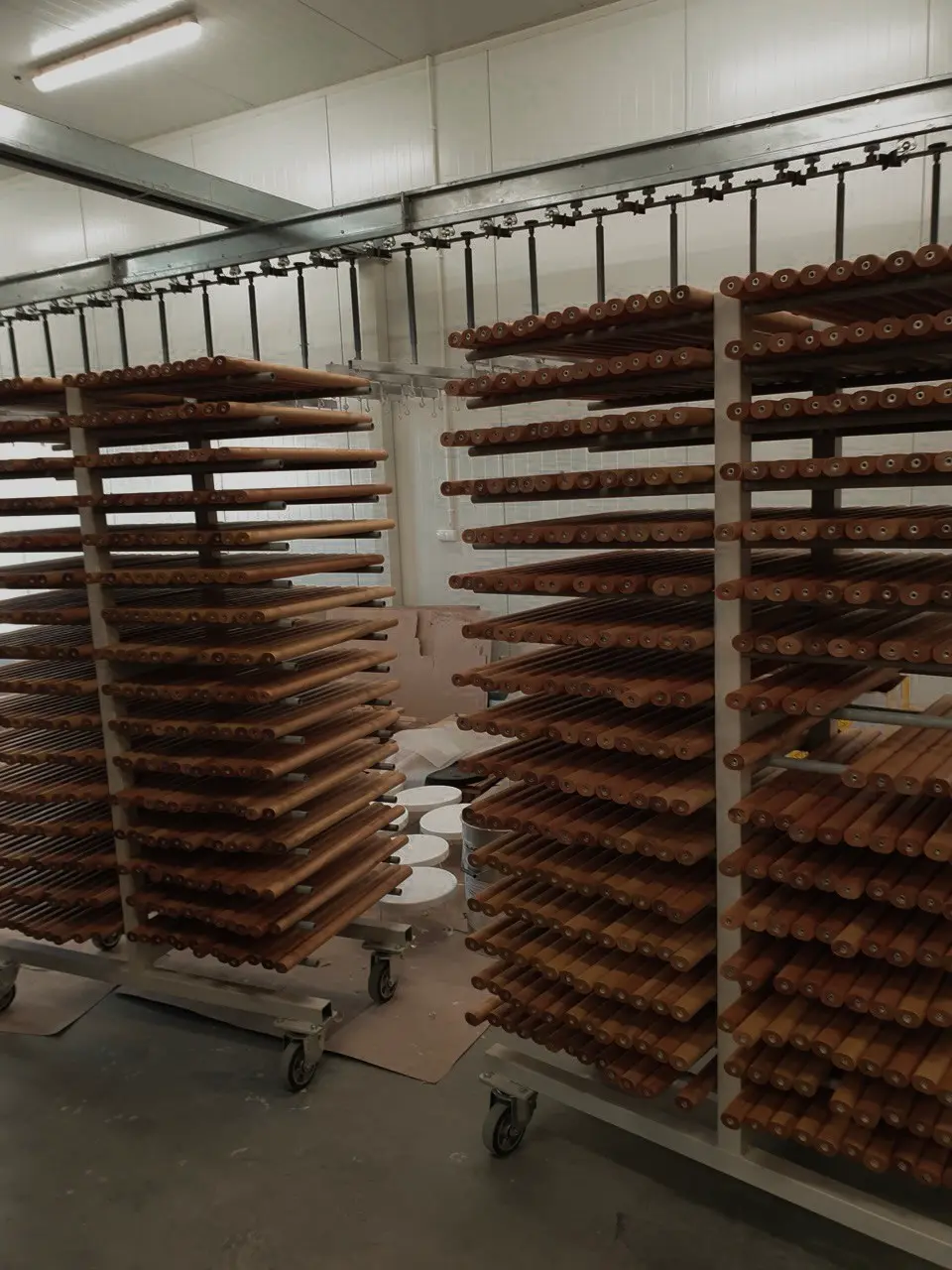
One factory. Finished by hand.
BenchK is built entirely in Rzeszów, Poland — a single facility with vertically integrated beech finishing, steel fabrication, and polyurethane moulding. We don't outsource. We don't ship components across borders. Everything happens under one roof.
European beech
Solid, kiln-dried rungs hand-oiled three times with food-grade linseed oil — absorbed between coats, no lacquer.
Structural steel
European structural-grade steel, powder-coated for corrosion resistance, with CNC-machined mounting plates held to sub-millimeter tolerance.
EU safety codes
Every frame is built and tested to PN-EN 12346:2001 and PN-EN 913:2019-03 — the European standards written for gymnastic equipment.
Built in Rzeszów, end to end.
Every BenchK comes out of a single facility in Rzeszów, Poland — and stays inside that facility from the first cut of steel to the final QC pass. Beech finishing, structural fabrication, polyurethane moulding, and load testing all happen under one roof, on one floor, by the people you see here.
Vertical integration is the whole point. Materials are European. Tolerances are held in-house. Quality control doesn’t live in a third-party certificate — it lives in the room next to the people building the frame.
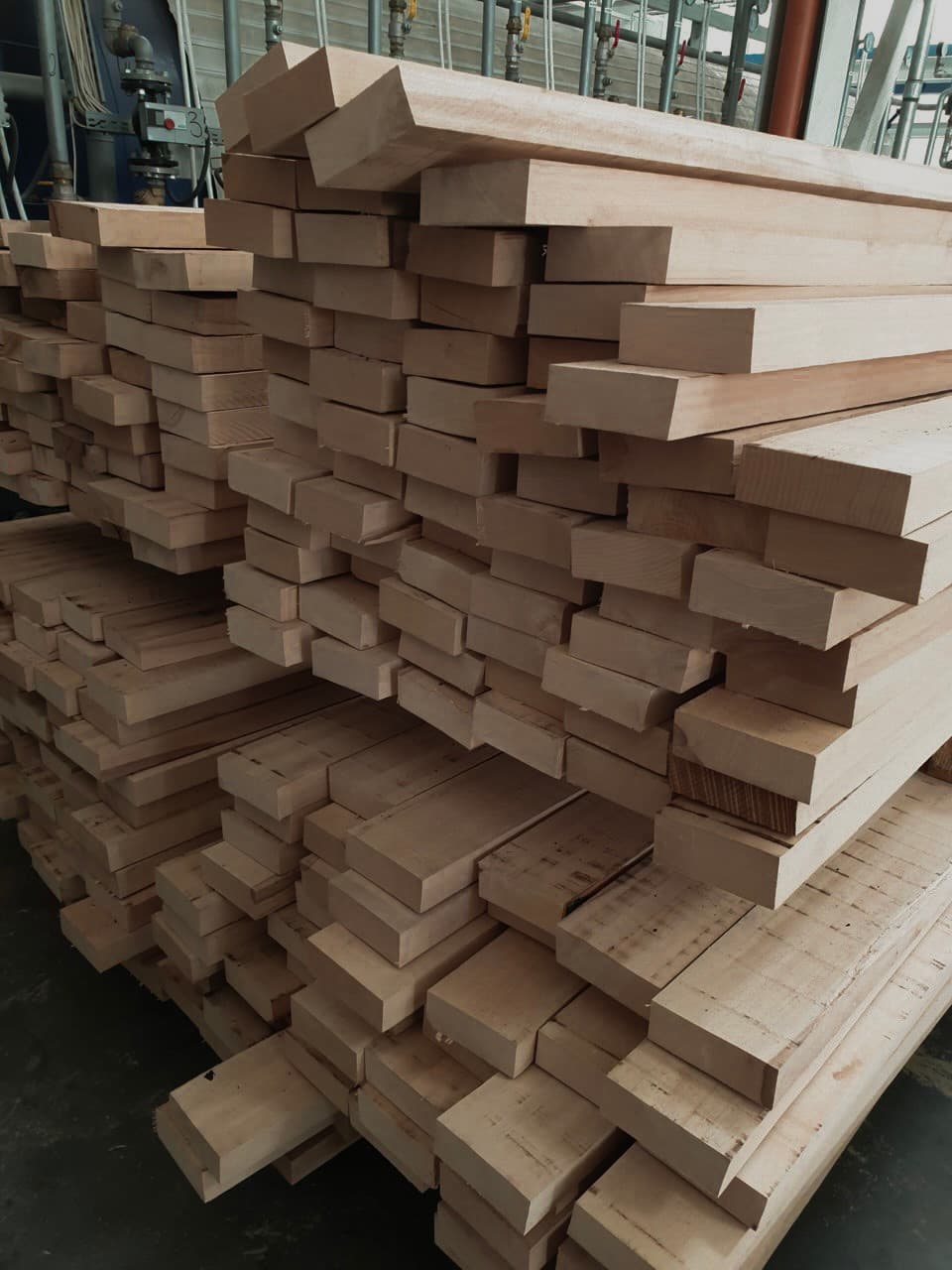
European beech, hand-oiled three times.
Our rungs are turned from solid European beech — a dense, tight-grained hardwood chosen for its resistance to flex and splintering under hanging load. After machining, each rung passes through three separate oil cycles.
The oil is food-grade, linseed-based. We apply by hand, then wait for the wood to fully absorb the coat before applying the next. This is how you prevent micro-cracks — the kind that lacquered or varnished wood develops after six months of sweat.
Our beech doesn’t have a finish. It has three absorbed coats, and a surface that ages the way leather ages.
Structural steel, CNC-machined.
The BenchK frame is European structural-grade steel, reinforced at the high-load points — the mounting plates and the attachment brackets — and powder-coated for long-term corrosion resistance.
Every mounting plate is CNC-machined to sub-millimeter tolerance. That’s not a flex — it’s what allows the frame to distribute load evenly across the wall, so a 330-pound user on the pull-up bar doesn’t put shearing force on a single anchor.
Good wall bars don’t fail at the rungs. They fail at the mount. Ours don’t fail.
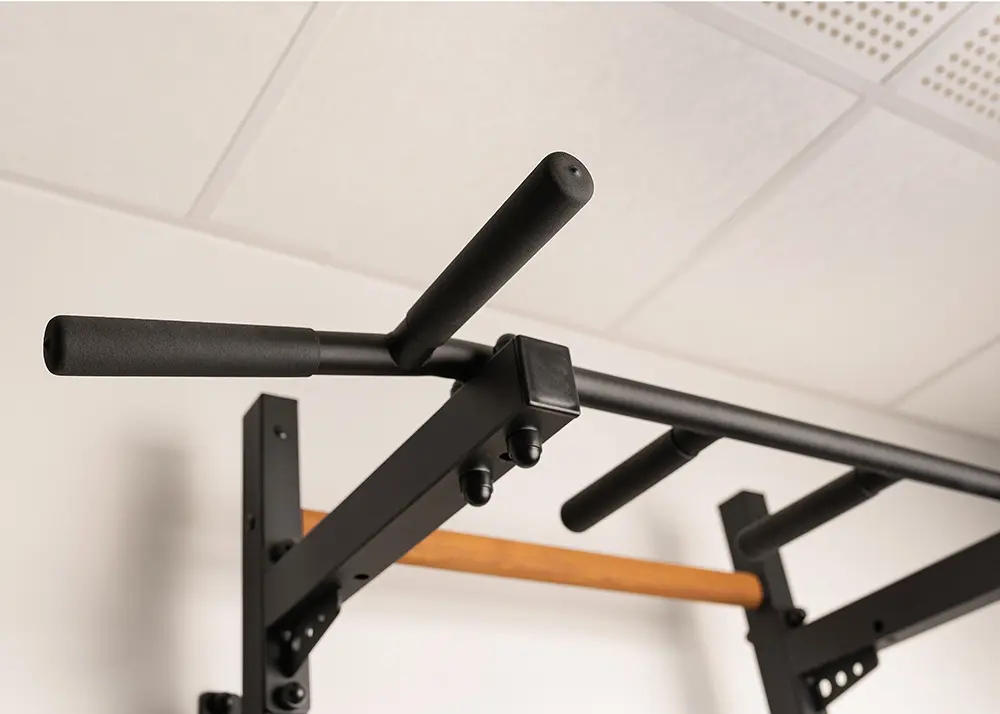
Dense. Sweat-proof. Built for daily volume.
For the bench surfaces, dip-station pads, and grip wraps, we use a dense, tear-resistant polyurethane — the same class of material used in professional gym benches, not the foam you’ll find on budget equipment. It holds its shape under pressure. It doesn’t absorb sweat. And it doesn’t degrade with UV exposure or cleaner chemicals.
Every pad is warrantied for two years. In practice, they outlast that by a decade.
If we wouldn’t put it in our own home, we don’t ship it.
From raw stock to finished ladder.
- 01
Beech selection
European beech is kiln-dried to controlled moisture content, then graded for straight grain and uniform density before turning.
- 02
Steel cutting + TIG welding
Structural profiles are cut, TIG-welded at reinforcement points, and stress-relieved. TIG is the slow, precise method — clean fusion, no spatter — and every joint is hand-inspected before powder-coating.
- 03
Powder-coating
Frames pass through a sand-blast, phosphate-dip, and electrostatic powder coating — then are oven-cured for a rock-hard finish.
- 04
Rung finishing
Three hand-oiled coats of food-grade linseed oil, with full absorption between coats. No varnish, no lacquer, no gloss.
- 05
Polyurethane moulding
Bench pads, armrests, and grip components are moulded in-house to spec, then trimmed and fitted to the frame.
- 06
Final assembly + QC
Each piece is dry-assembled, load-tested, re-inspected, and packed with certified mounting hardware matched to your wall substrate.
Own a piece of European craft.
Explore the complete catalog, or see the Series 7 flagship — our most refined expression of a decade of manufacturing.