
How to Open a Pilates Studio: Equipment Budget Guide 2026
A fully equipped Pilates studio costs between $50,000 and $150,000 in equipment alone. The real question isn't how much everything costs — it's what you actually need on day one, what can wait, and what gives you the best return per dollar. A complete equipment budget breakdown for opening a studio in 2026.
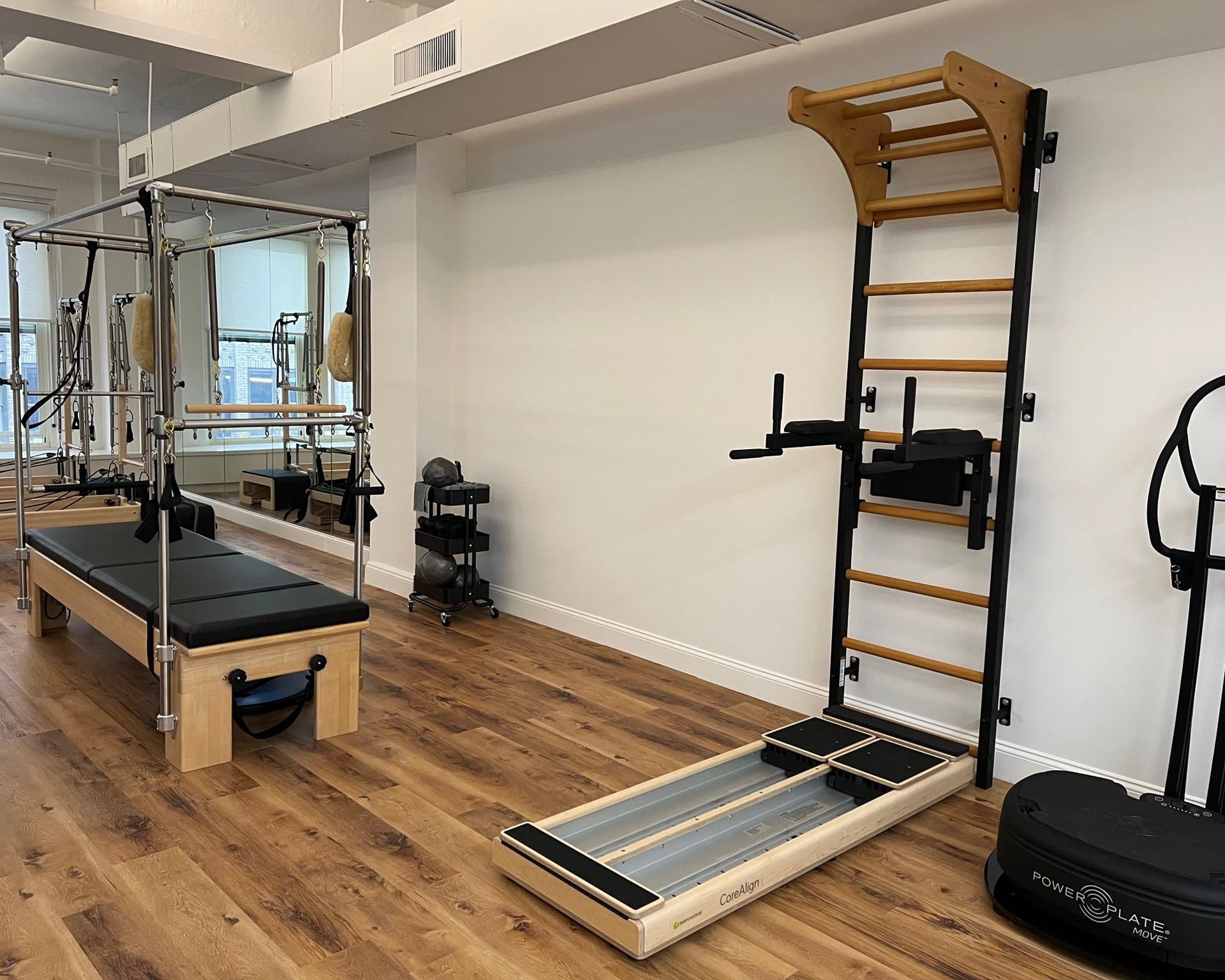
The full startup picture (not just equipment)
Equipment is typically 20–35% of total startup cost.
| Estimated range | Notes | |
|---|---|---|
| Lease deposit + first/last month | $6,000–$20,000 | Varies wildly by market |
| Build-out / renovation | $15,000–$50,000 | Mirrors, flooring, HVAC, paint, reception |
| Equipment | $50,000–$150,000 | Detailed breakdown below |
| Insurance | $2,000–$5,000/yr | General + professional liability |
| Software (booking, payments) | $150–$400/mo | Mindbody, Momoyoga, Walla |
| Marketing (pre-launch) | $3,000–$10,000 | Website, social, local outreach |
| Working capital (3–6 mo) | $15,000–$40,000 | Rent, utilities, payroll before revenue stabilizes |
| Total startup estimate | $91,000–$275,000 | Before your first client walks in |
Phase 1 — Opening Day Equipment
Reformers — your core investment
Reformers are non-negotiable. Start with 6–10. Group class sweet spot for revenue + personal attention.
| Approx. price/unit | Notes | |
|---|---|---|
| Balanced Body Allegro 2 | ~$4,895 | Industry standard |
| Peak Pilates MVe | ~$3,495 | Solid mid-range, smaller footprint |
| Merrithew SPX Max | ~$4,595 | Stott-trained instructors prefer this |
| Balanced Body Studio Reformer | ~$5,995 | Premium, commercial-grade |
| Budget reformers | ~$1,500–$2,500 | Functional but durability questions for commercial use |
6–10 reformers at $3,500–$6,000 each = $21,000–$60,000. Each reformer needs 40–50 sq ft including clearance. 8 reformers = 320–400 sq ft just for the reformer room.
Mat equipment
- Pilates mats (10–15): $40–$80 each
- Props (rings, balls, bands, blocks): $500–$1,000 total
- Subtotal: $900–$2,200
Reception & basics
Sound system, mirrors, storage, reception desk: $2,500–$8,500.
Phase 1 total: $24,400–$70,700. Doors open with reformer + mat classes generating revenue.
Phase 2 — Year 1 additions (the revenue multipliers)
Cadillac (Trapeze Table)
1–2 Cadillacs at $3,300–$5,500 each. Used for private sessions and small groups (2–3 clients).
Pilates chairs (Wunda/Combo)
2–4 chairs at $1,495–$2,795 each.
Wall-mounted training stations — the highest-ROI equipment addition
| Reformer | Wall bars (BenchK 221B) | |
|---|---|---|
| Cost per station | $3,500–$6,000 | $1,019 |
| Floor space | 40–50 sq ft | 0 sq ft (wall-mounted) |
| New class formats | Reformer classes | Wall Pilates, Suspension Pilates, Decompression, Barre-at-the-Wall, Prenatal |
| Ongoing maintenance | Springs, ropes, wheels | Near zero |
Six BenchK 221B units along one wall cost $6,114 — roughly the price of one premium reformer — and create an entirely new class format for 6 clients. Add Recoil S2 Gym ($429 each) to each station = $2,574. Phase 2 wall bar setup: $8,688 total.
What this unlocks:
- Wall Pilates — the TikTok trend, but with real equipment
- Suspension Pilates — pike, suspended hundred, plank variations with Recoil
- Decompression & Stretch — the format aging clients ask for
- Barre-at-the-Wall — rungs function as a ballet barre at any height
- Prenatal wall work — supported standing exercises using fixed grip points
Revenue projection. 2 wall classes/day, 6 spots, $35/class, 50% occupancy, 5 days/week = $1,050/week → ~$4,550/month. Payback on $8,688 investment: ~2 months. For comparison, 2 reformer classes per day at similar rates and occupancy generate comparable revenue but require $21,000–$36,000 in reformer investment.
This isn't experimental. Peak Pilates has carried BenchK on peakpilates.com. Praxis Pilates in NYC has integrated wall bars into their class programming.
BenchK vs. Fuse Ladder
| Fuse Ladder | BenchK 221B + Recoil S2 Gym | |
|---|---|---|
| Approx. price | ~$2,477 | $1,448 ($1,019 + $429) |
| Suspension training included | No | Yes (Recoil S2) |
| Climbing / hanging | Limited | Full (8 rungs + pull-up bar) |
| Accessory ecosystem | Limited | Dip bar, bench, desk, boxing, gymnastic |
| Modular expansion | No | Yes (add over time) |
Phase 3 — Year 2+ (differentiation)
| Cost | Purpose | |
|---|---|---|
| Ladder Barrel (1–2) | $2,000–$3,500 ea | Spinal articulation, advanced work |
| Spine Corrector / Arc (4–6) | $200–$400 ea | Class prop, spinal mobility |
| Tower units (4–6) | $2,500–$4,500 ea | Reformer-tower hybrids |
| Additional reformers (2–4) | $3,500–$6,000 ea | Expand class size or second room |
Phase 3 subtotal: $14,000–$40,000+
Complete budget summary
| Investment | Timeline | Revenue impact | |
|---|---|---|---|
| Phase 1: Reformers + mat + basics | $24,400–$70,700 | Opening day | Core class revenue |
| Phase 2: Cadillac + chairs + wall bars | $15,000–$30,900 | Months 3–12 | New class formats, private sessions |
| Phase 3: Specialty equipment | $14,000–$40,000+ | Year 2+ | Differentiation, advanced programming |
| Grand total | $53,400–$141,600 |
Revenue projection — making the numbers work
A 1,200 sq ft studio with 8 reformers and 6 wall bar stations:
| Sessions/day | Capacity | Price | Occupancy | Daily revenue | |
|---|---|---|---|---|---|
| Reformer group | 4 | 8 | $38 | 70% | $851 |
| Wall Pilates group | 2 | 6 | $35 | 50% | $210 |
| Mat class | 1 | 12 | $22 | 60% | $158 |
| Private sessions | 3 | 1 | $85 | 80% | $204 |
| Daily total | $1,423 |
Monthly (22 working days): ~$31,300. Wall classes contribute ~$4,550/month on $8,688 investment.
7 mistakes new studio owners make
1. Buying everything at once. You don't need a Cadillac, 4 chairs, a barrel, and 10 reformers on opening day. Start with reformers and mats. Add as revenue justifies.
2. Ignoring the walls. Most new owners fill the floor and leave the walls empty. Every empty wall is revenue you're not generating.
3. Choosing the cheapest reformers. Budget reformers ($1,500–$2,500) save money upfront but create problems within 12–18 months.
4. Overpaying for brand prestige. Smart budget allocation matters more than the most expensive reformer in town.
5. Forgetting maintenance costs. Reformers need spring/rope/wheel maintenance: $200–$500/month across your fleet. Wall bars need almost nothing.
6. Not planning for variety. If you only offer reformer classes, you're competing directly with every other reformer studio in your area.
7. Skipping the revenue projection. Every piece of equipment should have a number attached: how many classes per week, at what price, at what occupancy.
Smart first-year timeline
| Purchase | Cost | Reasoning | |
|---|---|---|---|
| Pre-opening | 8 reformers + mats + basics | $30,000–$56,000 | Essential for launch |
| Month 3 | 6 wall bar stations (BenchK 221B) | $6,114 | New class format, low cost |
| Month 4 | 6 Recoil S2 Gym | $2,574 | Adds Suspension Pilates |
| Month 6 | 1 Cadillac | $3,300–$5,500 | Private session capacity |
| Month 9 | 2–4 Pilates chairs | $3,000–$8,000 | Small group variety |
| Month 12 | 1 additional Cadillac (if demand) | $3,300–$5,500 | Based on demand |
| Year 1 total | $48,300–$83,700 | Phased, revenue-supported |
Frequently asked questions
How much does it cost to open a Pilates studio?
What equipment do you need to open a Pilates studio?
Are wall bars worth it for a Pilates studio?
How many reformers do I need to start?
What's the difference between BenchK wall bars and a Fuse Ladder?
How long until a Pilates studio breaks even?
Do I need a Cadillac on opening day?
How much space do I need for a Pilates studio?
Specifying for a clinic, studio, or hotel?
Talk to a commercial specialist. Bulk pricing, mounting guidance, and net-30 terms on three-unit and larger orders.