
What Are the 2026 Presidential Fitness Test Standards — and How Do Kids Actually Train for Pull-Ups?
The test returns to schools in fall 2026 on a voluntary basis, and the pull-up — dropped in 2013 — is officially back on the scorecard. Below: the verified standards, how many kids can actually do a pull-up (real numbers, not internet folklore), and the progression coaches use to get a child from zero to one.
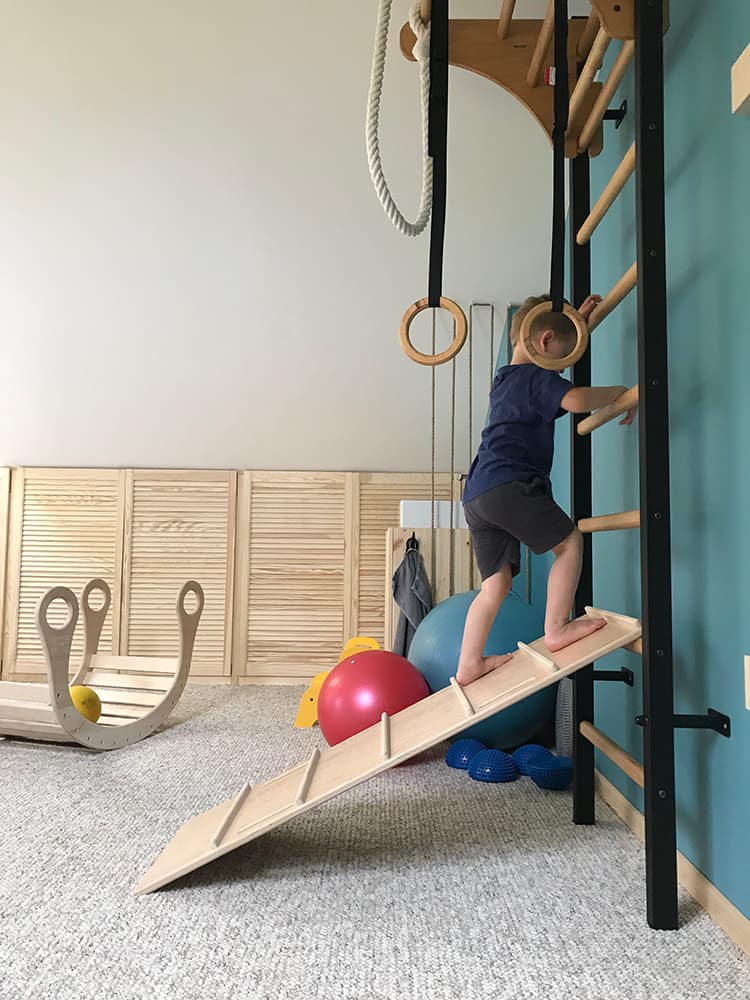
Pull-ups are the hardest event on the test, and most kids have never trained for one — not because they’re lazy, but because nothing in an American childhood asks them to pull their own weight upward.
One thing first: BenchK has no affiliation with the President’s Council on Sports, Fitness, and Nutrition, the Department of Health and Human Services, or the Presidential Fitness Test program. We make training equipment. The standards below come from official documents, cited throughout.
What exactly is on the 2026 Presidential Fitness Test?
Three categories. Two options each. The student picks one event per category and has to hit the benchmark in all three (official standards PDF, whitehouse.gov, May 2026):
| Option A | Option B | |
|---|---|---|
| Core & Abdominal Strength | Curl-ups (reps in 1 minute) | Plank (seconds) |
| Cardiorespiratory Fitness | One-mile run (time) | 20m Beep Test (laps) |
| Upper Body Strength | Right-angle push-ups (reps) | Pull-ups (reps) |
Now look at what’s missing. The flexed-arm hang — the old escape hatch for kids who couldn’t do a pull-up — is gone. So is the V-sit. So are the sit-and-reach and the shuttle run. Flexibility and agility left the building entirely. The 2026 test is strength and endurance, full stop.
There are three recognition levels: the Presidential Award, a National Award, and a Certificate of Participation for every student who completes the test (whitehouse.gov/fitness).
How many pull-ups does a kid need for the Presidential Award?
Selected benchmarks from the official standards published in May 2026. Every number below comes from one place: the official standards PDF at whitehouse.gov.
| Boys: pull-ups | Boys: mile | Boys: curl-ups | Girls: pull-ups | Girls: mile | |
|---|---|---|---|---|---|
| Age 6 | 2 | 10:15 | 33 | 2 | 11:20 |
| Age 8 | 5 | 8:48 | 40 | 2 | 10:02 |
| Age 10 | 6 | 7:57 | 45 | 3 | 9:19 |
| Age 12 | 7 | 7:11 | 50 | 3 | 8:23 |
| Age 14 | 10 | 6:26 | 56 | 3 | 7:59 |
| Age 17+ | 13 | 6:06 | 57 | 3 | 7:59 |
Official standards PDF, whitehouse.gov, May 2026. Full tables for every age 6–17+ are on the official document.
Keep in mind the pull-up is an option, not a sentence. That same 10-year-old boy can substitute 22 right-angle push-ups, trade the 45 curl-ups for a 119-second plank, or swap the 7:57 mile for 55 beep-test laps.
And if those numbers give you déjà vu from your own gym-class days: press coverage notes the new Presidential benchmarks closely mirror the old 85th-percentile standards. Six pull-ups and a 7:57 mile was the bar for a 10-year-old boy back then, too (LegalClarity).
Is the Presidential Fitness Test mandatory?
No. And this is the single most misreported fact about the revival.
Participation is voluntary for public schools: Executive Order 14327, signed July 31, 2025, contains no mandates, timelines, or enforcement mechanisms, and administering the test is a state and district decision (CDC Preventing Chronic Disease, 2026; STAT News, July 2026). HHS says schools begin administering it in fall 2026 — the 2026–27 school year (HHS press release, June 2026).
There’s exactly one exception: the test is mandatory in the Department of Defense Education Activity’s 161 K-12 schools on military installations, announced May 6, 2026 (Military Times). HHS says “a number of states” agreed to participate but has published no list; Arkansas is reported by press as an early adopter (STAT News).
Parents: ask your school. PE directors: unless you’re DoDEA, it’s your call.
Why did European kids pass the 1950s fitness test American kids failed?
Here’s the part almost nobody knows — and it happens to run straight through the equipment we make.
In the mid-1950s, researchers Hans Kraus and Ruth Hirschland tested American and European children on a set of basic fitness measures — the Kraus-Weber test. 58% of American children failed at least one measure. Only 8.7% of European children did (Time, 2025). That result alarmed President Eisenhower enough to create the President’s Council on Youth Fitness in July 1956. The first national youth fitness test followed in 1958, and President Johnson created the Presidential Physical Fitness Award in 1966 (Time, 2025).
So why were European kids so far ahead? Different PE tradition, going back more than a century. Per Henrik Ling founded the Royal Central Gymnastics Institute in Stockholm in 1813 — Europe’s first physical education institution — and the wall bars he introduced became standard equipment in school gyms across Sweden, Germany, and much of the continent (Britannica; see the history of wall bars). A European child of the 1950s grew up climbing, hanging, and pulling in a gym lined with wall bars. American PE went toward sport and games instead. That split never really closed, and it still shapes rehab practice today.
The test’s later history was not pretty. Percentile scoring rewarded only the top 15%, and a 2018 study by Matthew Ladwig and colleagues found that negative childhood PE memories — embarrassment above all — correlate with sedentary behavior in adulthood (Time; STAT News). In September 2012 the Obama administration replaced the test with FitnessGram’s health-zone approach, phasing it out after the 2012–13 school year. Then, on July 31, 2025, Executive Order 14327 brought it back, with HHS administering the test (Federal Register, 90 FR 37993). Rollout begins fall 2026.
If you keep one idea from this history, keep this one: the test measures fitness. It has never trained anyone. Leading youth-strength researcher Avery Faigenbaum needed six words for it: “Measuring fitness does not create fitness” (STAT News, July 2026). The training is the part you actually control.
How many kids can actually do a pull-up?
You may have seen the claim that “90% of kids can’t do a single pull-up.” No study supports that number.
The best evidence we have is Ervin et al., Pediatrics, 2014, drawn from the NHANES National Youth Fitness Survey (1,224 children ages 6–15). It tested the modified pull-up — an easier, feet-supported version — and even there, about 28% of girls and 15% of boys could not complete a single repetition. Among girls with obesity, just 4.2% managed five or more, versus 47.9% of normal-weight girls; for boys, 27.1% versus 64.1% (Ervin et al., Pediatrics, 2014). The standard pull-up on the 2026 test is harder still.
The backdrop makes those numbers less surprising than they first look: only about 1 in 4 to 1 in 5 US kids meets the 60-minutes-a-day activity guideline (CDC 2023 data via STAT News; Physical Activity Alliance 2024 Report Card), and 21.1% of American children and teens had obesity per 2021–2023 CDC measurements (CDC NCHS Health E-Stat 112).
So a child who can’t do a pull-up today is in the majority, not behind. The good news is that the pull-up responds quickly to consistent practice.
How does a kid go from zero pull-ups to one?
Safety first, because it’s the question underneath every parent’s question. The American Academy of Pediatrics’ 2020 clinical report on resistance training (Stricker et al., Pediatrics, June 2020) states that strength training — including bodyweight work like hanging and climbing — is safe and beneficial for children, appropriate from around age 5 with supervision, proper technique, and gradual progression. And no, it doesn’t stunt growth. That one’s a myth: supervised training does not damage growth plates, and it improves bone strength (Faigenbaum, Pediatric Exercise Science, 2013).
Second, some honesty about the method itself. The progression below is how experienced coaches build a first pull-up (ACE Fitness). It is coaching best practice, not proven science — no randomized controlled trial has compared pull-up training methods in children — and it carries no guarantee: kids progress at very different rates.
| What the child does | What it builds | On wall bars | |
|---|---|---|---|
| 1. Dead hangs | Hang 10–30 seconds, feet resting lightly on a rung if needed | Grip strength, shoulder tolerance | Feet on a lower rung — the child controls how much weight their arms carry |
| 2. Active hangs | Pull shoulder blades down without bending elbows, 15–30 seconds | Scapular control — the “engine start” of a pull-up | Same setup; rung support lets them focus on the shoulder motion |
| 3. Assisted pull-ups | Pull up while feet push off a support | The full movement at reduced load | Feet push off a lower rung — a built-in assist the child self-regulates, no bands needed |
| 4. Negatives | Start at the top, lower as slowly as possible | Eccentric strength | Climb the rungs to the top position, then lower. The rungs ARE the step-up |
| 5. First pull-up | Full pull-up from a dead hang | The test event | Adjustable bar at a height they can reach and dismount safely |
Ten focused minutes a few times a week is plenty. This is practice, not a workout. Supervise every session — the AAP’s endorsement is specifically of supervised training — and if your child has a medical condition, ask your pediatrician first. Nothing here is medical advice.
Now look at that wall-bar column one more time. Every single stage uses the adjustable bar or the rungs as a self-scaled assist. It’s the same graduated-load principle adults use when hanging for shoulder health, applied to a lighter, shorter human.
What equipment does a kid need to practice pull-ups at home?
Less than you’d think. The cheapest option is free. Here’s the field, compared without spin.
| Cost | Bar at kid height? | Assist for stages 1–4? | |
|---|---|---|---|
| Playground / monkey bars | Free | Sometimes | No — feet dangle |
| Doorway pull-up bar | Inexpensive | No — adult door-frame height | No |
| Wall bars (any brand) | Mid-range | Yes, if the bar adjusts | Yes — rungs give graduated foot support |
The honest read: the playground is genuinely fine for practice — the downsides are weather, travel time, and no way to fine-tune assistance, and practice season runs through winter while playgrounds don’t. A doorway bar works for a teen who already has pull-ups; for a zero-pull-up child it’s too high to reach, there’s nothing to push off, and friction mounts aren’t ideal for daily swinging. Wall bars make every progression stage self-service — they cost more and need a wall.
If you go the wall-bar route, here’s what we make, with exact prices:
- BenchK 111 ($929) — all-beech wall bars with an adjustable-height pull-up bar. The adjustability is the kids’ feature: set the bar at your 8-year-old’s reach today, raise it as they grow. FSC-certified beech, hand-oiled with food-safe oil, 265-lb capacity — and it looks like furniture, not gym equipment, which matters when the available wall is in a bedroom or living room.
- BenchK 211B ($915) — steel frame with beech rungs and the same style of adjustable bar, 330-lb capacity for the whole family including heavier adults. That capacity is the quiet argument for the whole purchase: the same bar your kid practices on serves your own pull-ups and hangs, so one wall trains two generations.
- A076 gymnastic set — cotton climbing rope, wooden swing, adjustable rings. The piece that makes training not feel like training: a 7-year-old who climbs and swings daily is doing stages 1–2 without being asked. It ships bundled with the bars — the 211B + A076 bundle is $1,139.
BenchK systems are certified to PN-EN 913:2019 and PN-EN 12346:2001 — the European safety standards regime for school gymnastic equipment — with a 10-year warranty on metal parts. For daily use beyond test prep, see Swedish ladder exercises and wall bars in the children’s room.
Is this test-prep hype? Fair challenge — the test is voluntary, and your kid may never take it. Our honest answer: don’t buy anything for the test. Buy — or don’t — for the daily habit. A child who hangs and climbs regularly walks into any fitness test already prepared. That was the European playbook: nobody trained for the Kraus-Weber test either. The equipment was just on the wall.
What should schools know before fall 2026?
Briefly, because we’ve covered school procurement in depth elsewhere: schools that opt in will need pull-up stations, and most American school gyms don’t have them — as of the 2016 Shape of the Nation report, only 16 states even mandated fitness testing (CDC Preventing Chronic Disease, 2026). Wall bars are the European answer: wall-mounted, no floor footprint, and a row of them along one wall serves several students at once, certified to the EN 913 school-equipment standard and built for daily institutional use. For the budget math and equipment planning, see school PE equipment for the 21st century.
BenchK is not affiliated with, endorsed by, or connected to the President’s Council on Sports, Fitness, and Nutrition, HHS, or the White House. Verify current benchmarks at whitehouse.gov/fitness. This article is not medical advice — consult your pediatrician before starting a child on any training program.